

Body of Knowledge: The Real Power of the Luteal Phase
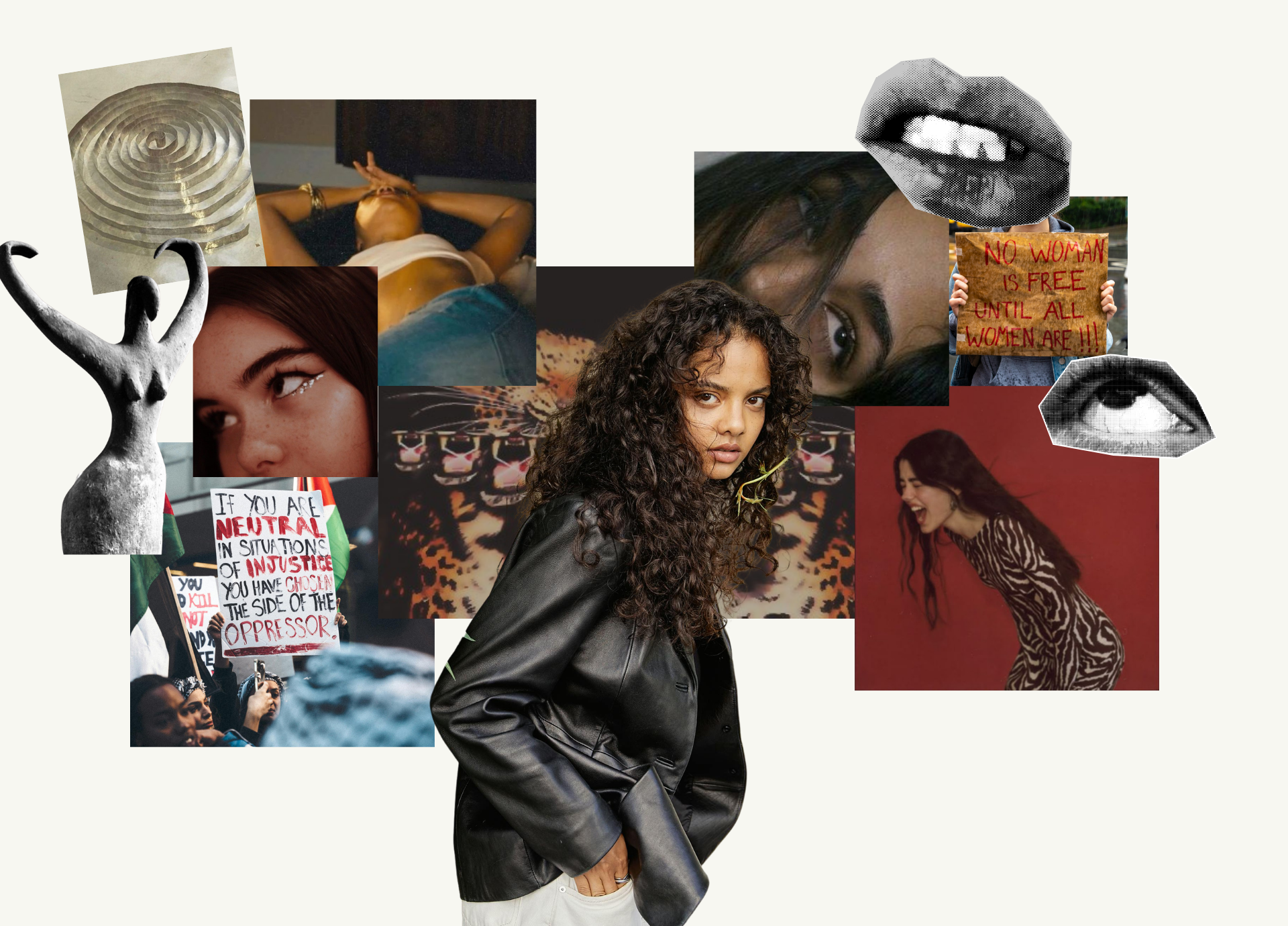
Is the luteal phase making you crazy—or making you clear? In the final installment of Body of Knowledge, we dig into the history of how women's cyclical emotions have been pathologized and what it means to actually take the luteal phase seriously.
The luteal phase makes you crazy. The luteal phase turns you into a gremlin. You can’t be held responsible for what you did during your luteal phase. Don’t listen to your brain during your luteal phase. Sound familiar?
We have to talk about the luteal phase. It’s the most misunderstood, mistreated, and maligned phase of the cycle. As it gains visibility and enters the public lexicon, it’s both minimized and over-played, being made into symbol onto which we are are working through our thoughts and feelings about cyclicality, societal expectations, anger, shame, and what it means to be a woman. Does the luteal phase make your crazy? Is it empowering to embrace the mess? Is the luteal phase the modern hysteria?
As present as these questions seem, they’re not new. And the answers reveal a lot not only about our bodies, but about society in general—and importantly, about how we can build something better. Let’s get into it.
Throughout Body of Knowledge, we’ve been exploring the debate around cycle syncing. In this final installment of the series, we’re zooming in on one argument in particular. The argument, which I have been seeing more and more frequently, that even when well intentioned, cycle syncing is damaging because it paves the way for men to dismiss or undermine women based on their hormonal cycle (“you can’t be trusted right now, you’re in your luteal phase”).
This argument is what a lot of the pushback on cycle syncing within feminist spaces is tapping into—the idea that cycle syncing creates a framework to label women as erratic, chaotic, hormonal, hysterical. That rather than being empowering, those “I can’t be held responsible for what I said during my luteal phase” memes are actually reinforcing the idea that women are out of control.
And of course, this has historical precident. To understand it, let’s dig into the social history of premenstural syndrome (PMS). Before there was the diagnosis of PMS, there was hysteria. From ancient Greece through the 20th century, countless women were diagnosed with hysteria (side note, did you know the term hysteria comes from the greek word for uterus?). It was essentially a catch-all term for everything from pelvic pain to irritability to anxiety to low libido to high libido to water retention to depression to (literally) organizing for the right to vote. It was a tool for pathologizing women disguised as a diagnosis.
🌀 Go deeper: Listen to Chaos & Control🌀

Then came PMS, which first appeared as a medical problem in the early 1900s. Throughout its history, PMS has been associated with stereotypical "feminine" traits: emotional, sensitive, moody, nagging, overly expressive, crazy, chaotic, out of control—all the same traits associated with hysteria.
PMS as a diagnosis is a double-edged sword. On one hand, it validates the sometimes debilitating cyclical symptoms that women experience during their luteal phase. On the other hand, it can pathologize normal, natural cyclical shifts. When they’re told “that’s just pms,” women start to think of their own cyclical shifts and heightened emotionality as a problem to be managed, a fault of their body. This creates a narrative around luteal phase shifts that frames them all as a problem, rather than a simple aspect of being a cyclical being in a bleeding body.
“PMS as a diagnosis first emerged around the same time that white women gained the right to vote. It then gained popularity both as a topic of public conversation and as a diagnosis during the women’s liberation movement.”
And then there is the historical context. PMS as a diagnosis first emerged around the same time that white women gained the right to vote. It then gained popularity both as a topic of public conversation and as a diagnosis during the women’s liberation movement. Both times when gender roles were being questioned and women’s role in society was shifting. Both times, in other words, when a diagnosis that made women seem unstable was remarkably convenient.
So the fact that “cycle syncing” (and specifically, the idea that the luteal phase makes you crazy) is rising in popularity now, amongst a tide of conservative extremism and tenuous reproductive rights, cannot be dismissed. The pathologization of women’s cycles has been happening for centuries.
This is where understanding the truth of our cycles—the luteal phase especially—is critical.
If we play into the idea that the luteal phase is the “worst” phase of the cycle, that it makes you crazy (in a bad way), or that we can’t trust ourselves during the luteal phase, we do end up perpetuating the pathologization. We minimize our own emotions before we have a chance to take them seriously. We allow ourselves to write off the uncomfortable truths we would rather not see, to label genuine and coherent dissatisfaction as a state of temporary madness. And if we take the cycle syncing girlbossapproach of treating it as a time for bubble baths and face masks and “managing” our emotions, we miss out on its revolutionary potential.
In truth, the luteal phase is when we are able to look around and see things clearly, at their rawest and realest and most honest. Hormonally speaking, it is when we are most likely to be aware of the things that upset us and less accommodating to others. In other words, it's not that we feel exaggerated emotions during the luteal phase, it’s that we’re less able to play nice and detach from those emotions. It’s the closest you can get to the truth of how you really feel (if you feel “crazy,” maybe it’s because you’re responding lucidly to the craziness of the society around you).
“What better way to control women, than to get them to control themselves?”
But seeing the truth of things can be inconvenient for the people who benefit from keeping you complacent, distracted, and passive. What better way to keep women complacent, than to convince them that their discontent is all in their head? That their anger, rage, grief at the unjust systems around them are just temporary emotions to self-care their way through? What better way to control women, than to get them to control themselves?
This is what a lot of cycle syncing content misses. The luteal phase isn’t a time to label yourself crazy and call it a day. It isn’t just a time for more baths and crying (I mean, those too)—it’s a time when we are able to see what isn’t working and radically reimagine how things could be, not just in our own lives but collectively.
“When we are rooted in that fundamental truth—that raw power and transformative potential—our luteal phase emotions become a tool that we can wield, rather than a weapon that can be used against us.”
When we are rooted in that fundamental truth—that raw power and transformative potential—our luteal phase emotions become a tool that we can wield, rather than a weapon that can be used against us. When we take them seriously rather than dismissing or minimizing them—even when they’re pointing us towards uncomfortable places—we reach deeper levels of honesty, agency, and presence in our lives.
Embracing the so-called chaos of the luteal phase and flowing with our ever-evolving nature (which often appears to the unsuspecting onlooker as if we are going quite crazy) is the path towards healing, growth, liberation, deep passionate love, creative fulfillment, and all of the things we, at our most honest and essential, may be trying to achieve.
Dismissing it, glazing over it through commercialism disgused as self-care, or denying it completely? That’s how we get stuck in lives we don’t want, dreams that aren’t our own, relationships with people we barely like, situations where we compromise our integrity, and societies that harm all of us.
As Audre Lorde wrote, “anger expressed and translated into action in the service of our vision and our future is a liberating and strengthening act of clarification…Anger is loaded with information and energy.”
Our luteal phase emotions are full to the brim with information and energy. Those emotions, clearly expressed and directed through action in service of our vision for justice and liberation and care and harmony and beauty, is electric. That is the true power of the luteal phase—and it’s available to us each and every cycle.
