

A Guide to Nontoxic Period Products

PSA: most pads and tampons contain lead, arsenic, microplastics, and hormone disruptors that can worsen cramps and lead to longer term issues. The good news? There are better options. Here's what to look for and what to avoid.
Every day, approximately 800 million women menstruate.
American women spend more than $2 billion dollars on period products each year. On average, a single woman will use about 15,000 pads or tampons during her life.
But despite the fact that half the world’s population use them on a regular basis, the FDA still doesn’t require manufacturers to disclose the ingredients. Because they're classed as "medical devices," there are hardly any FDA regulations around their ingredient safety at all.
Moreover, most of chemicals that end up in those products are entirely unregulated by the FDA and EPA, and little real research has been done on potential health risks.
Why nontoxic matters
Conventional pads & tampons (even some of the ones marketed as “clean”) are regularly found to be filled arsenic, lead, hormone-disrupting pesticides & dioxins. Meanwhile, both disposables like pads and tampons and reusables like period underwear can contain PFAS (aka "forever chemicals") and microplastics that have been linked to numerous health and environmental risks.
Even some brands who rose in popularity by marketing their period underwear as safe and nontoxic have been found to actually contain quite a substantial amount of PFAS.
This is especially harmful given that our vaginal tissue is full of blood vessels & lymph glands, which allow for chemicals to directly and easily transfer into your circulatory system.
Many women even report heavier and more painful periods when using conventional period products
All of those toxins right next to very absorbent, sensitive vaginal tissue on a regular basis? That can lead to some serious issues.
Many women even report heavier and more painful periods when using conventional period products, not to mention the long-term health risks that come from regular exposure.
But this doesn’t mean you have to choose between free-bleeding and toxins. Though we’re not one to knock free bleeding, you have options — you just have to choose carefully.
And in order to choose carefully, you need to understand what the potential risks are and how to watch out for them.
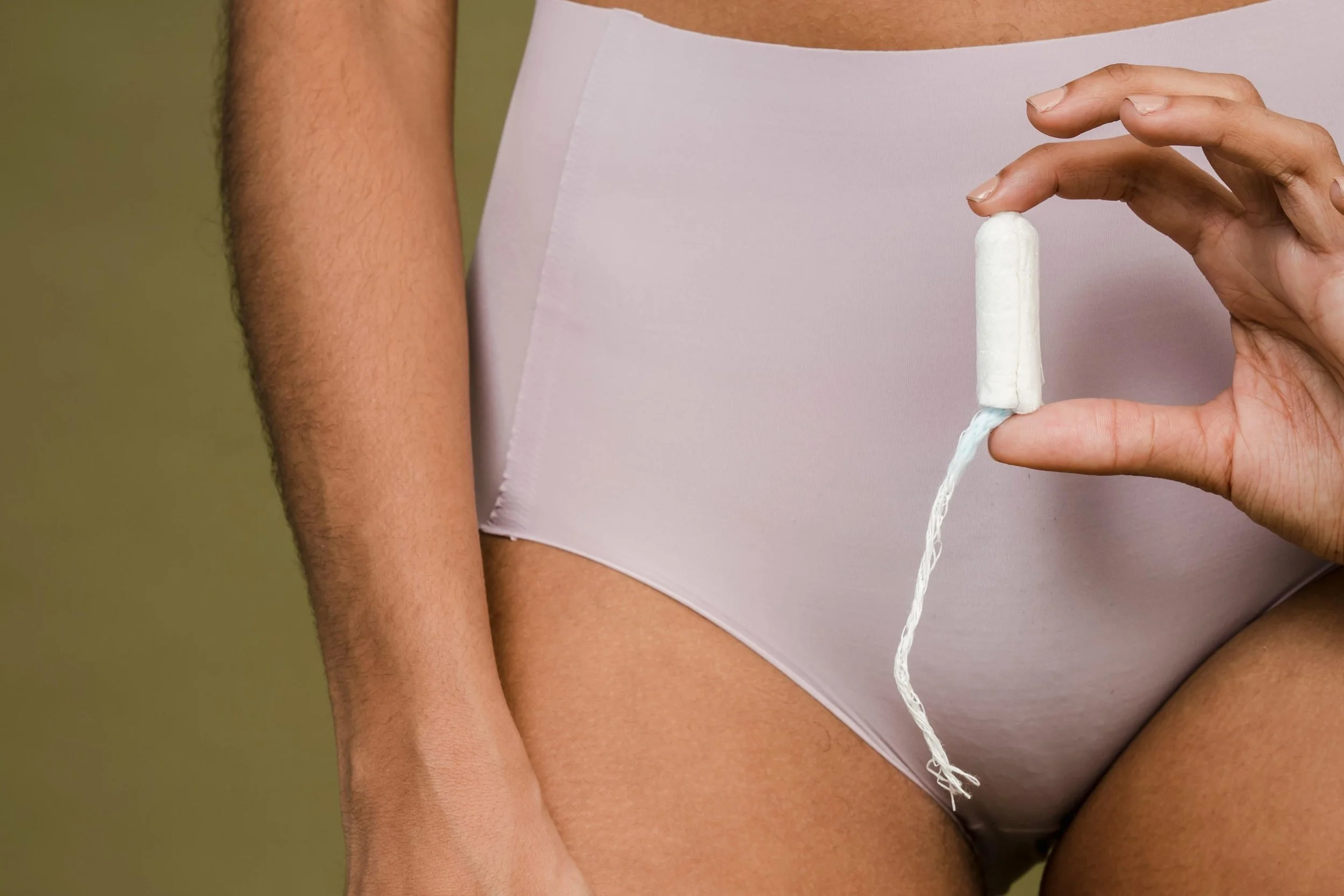
Disposable period products
Conventional pads & tampons are full of endocrine disrupting, skin-irritating, and straight up carcinogenic ingredients: pesticide residues, dioxins from the bleaching process, furans, unknown fragrance chemicals, adhesive chemicals, and plastics (as found in a study by Women's Voices For The Earth).
Regular exposure is linked to rashes and vaginal irritation, increased cramps and PMS, heavy or irregular periods, endometriosis, fibroids, and even reproductive cancers.
And then there’s the issue of plastic. Take tampons: many of them come wrapped in plastic, embedded in plastic applicators, and have plastic strings. Pads have even more plastic, from the leak-proof base to the synthetics that soak up fluid to the packaging. This plastic is considered medical waste, and therefore cannot be recycled.
Part of the reason for this is that plastic is cheap. There’s also the issue of socially conditioned shame and discretion that leads to even more unnecessary plastic packaging. With that being said, here’s what to look out for if you’re opting for disposable period products.
Tips for choosing pads & tampons:
Always choose organic
Look for unbleached and fragrance-free
Opt for materials like organic cotton, hemp & bamboo
Watch out for plastic in the packing and the product itself — if you're opting for tampons, always look for BPA-free or biodegradable applicators
The best pad & tampon brands:

Reusable period products
Period underwear
Period underwear has gained in popularity recently, and for good reason. They’re washable and with proper care last for years, so they have the potential to replace dozens to hundreds of boxes of pads or tampons. They’re a great option for those who like pads (and letting the blood flow out) but want a reusable option. They also make sleeping while on your period much more comfortable.
The number one thing to look for in period underwear is transparency. Look for brands that are regularly tested by independent parties, & who make the results of those tests readily available to you. Also look for full disclosure of all materials including fabric and treatments, as well as their manufacturing practices
Importantly, you want to look for organic, natural materials like organic cotton, hemp & bamboo.
The best period underwear brands:
Rif Care. Very cute, comfortable, and free of PFAS — these are our top pick (get 15% off with this link)
Saalt Wear. Ethically made and incredibly comfortable (our editor Sabrina loves the TENCEL comfort boyshort).
Modibodi. Cute & made primarily with bamboo. Some of their underwear are biodegradable. They also make period swimwear & activewear.
Period.co. No detectable PFAs and made of organic cotton. Plus they’re the most affordable options we’ve come across at just $12 per pair
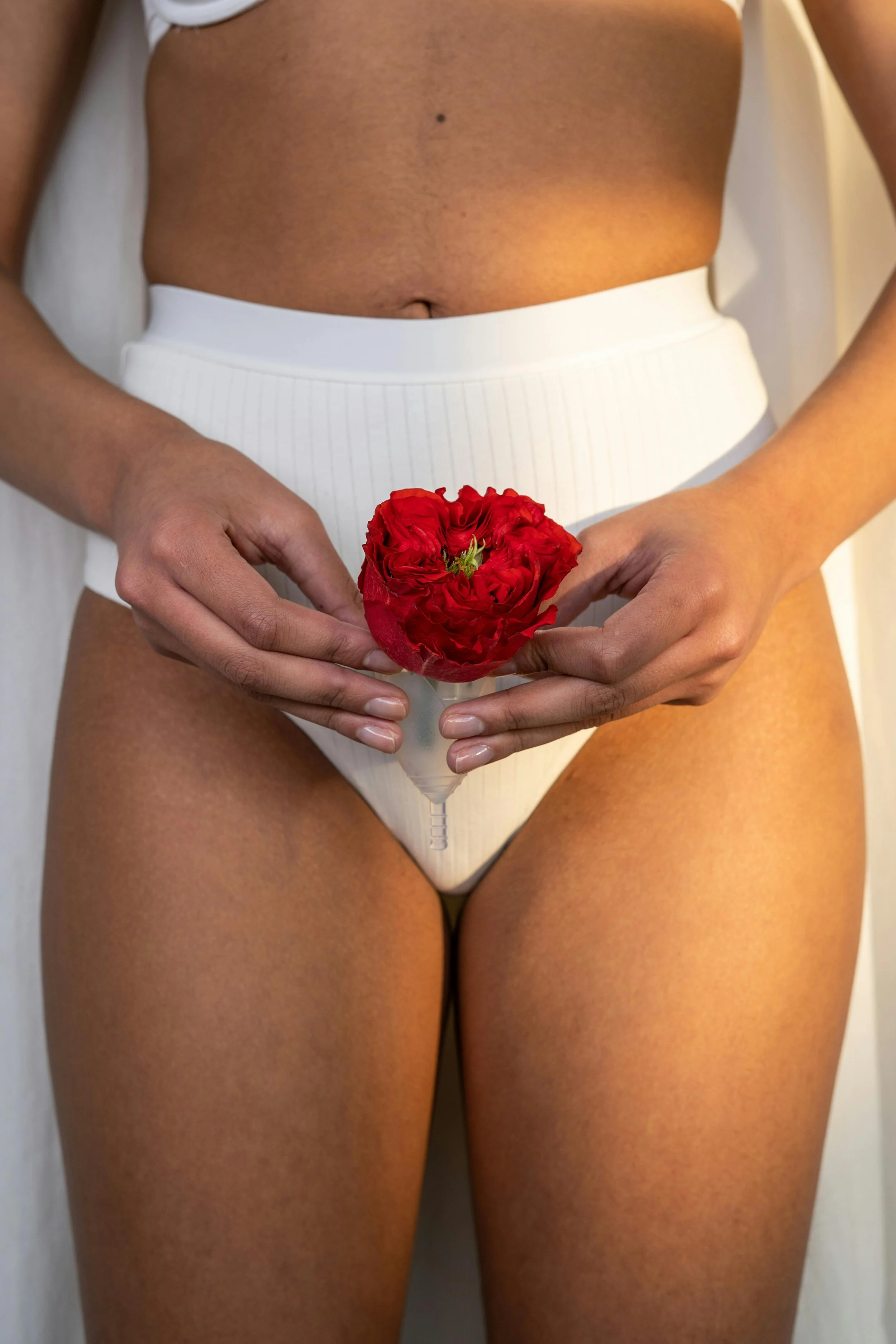
Menstrual cups & discs
Menstrual cups probably the most well-known reusable option. They’re affordable, last years, and are relatively easy to care for. It can be tricky learning to use them, but once you get the technique down they’re simple.
Cups and discs are similar, but they sit slightly differently inside of you. Menstrual cups sit lower in the vaginal canal and collect blood by creating a suction seal. Meanwhile, discs sit higher up and collect blood without suction, which makes them easier to insert and remove.
They’re made with just medical-grade silicone, so there aren’t as many things you need to watch out for health wise. That said, cups can put a lot of pressure on your pelvic floor and for some women can worsen cramps.
Our favorite options:
Viv for Your V (our editor Sabrina loves their menstrual disc)
Reusable pads
Reusable pads are a more niche option, but those who love them really love them. Though the phrase might conjure up images of bulky, diaper-esque cloths, the reusable pads of today are much thinner and more comfortable than their ancestors. They last 3-5 years, so can potentially replace hundreds of disposable pads.
Make sure to opt for organic, natural materials like organic cotton, hemp & bamboo.
Our favorite options:
