

Detox Your Closet: Founder Nethmie Hetti on Seaweed Underwear, Wearing Natural Fabrics as Rebellion, & Ditching Fast Fashion

“Wearing natural fabrics brings you closer to nature, in this world that is constantly pushing us toward living a more artificial life. Eating whole foods, spending more time in nature, and wearing natural clothes can all be personal acts of rebellion against the artificial.”
One thing we talk about a lot at Soulstice is the importance of nontoxic materials and sustainable fashion. So when we came across Kiseau, our interest was immediately piqued: underwear, made from organic cotton and seaweed?
So we sat down with Kiseau founder Nethmie Hetti to talk about the importance of natural fiber clothing, how to detox your closet, and building a brand with integrity in an industry built off exploitation.
Take us back to the beginning — when did you first connect the dots between what you were wearing and how your body was feeling?
Growing up in Sri Lanka, I was wearing a lot of cotton and linens without even realizing it because that was just the norm. Since it was a garment-producing country we just had access to a lot more natural fabrics. Mind you this was like the early '90s so everybody was just wearing what was available. I don't recall seeing the women around me wearing spandex or '80s nylon pieces that were so dominant in North America. I guess the fashion trends that came to South Asia in general were just looser, flowy clothes, puff sleeves and all of that.
\When I moved to Canada at 10 years old, I remember walking into these mega malls and losing my mind over how many options there were. I remember wanting to buy everything. Everything that wasn’t available to me in Sri Lanka.
So without me realizing, I went from growing up and wearing all these natural clothes to kind of overnight having synthetics in my closet.
It wasn't until high school that I really started to see how certain clothes were beginning to impact my mood and my overall energy in a negative way. Not only that but I started to notice how certain clothes would specifically give me headaches and a feeling of a sharp pain in my head that I could only allocate towards a specific faux leather jacket that I got from a liquidation store.
I remember telling my friends and family about this. At the time there wasn't a lot of literature about how clothes impact your overall being so I was just kind of not taken very seriously at the time. I don't blame anyone for that reaction because even today if someone said my clothes are giving me a headache, the natural response is probably “Are you sure it's your clothes? It must be something else."
But low and behold, 15 years later, you find out that fake leather products and water proof garments are literally bathed in PFAs and toxic finishes.
It wasn't for another decade that I started to tune into that same icky feeling, but this time it was for all of my polyester, nylon, and leisure wear and basically all my acrylic sweaters that produced immense static electricity during the winter, keeping me quite anxious and whatnot.
And that’s when my true transition to wearing natural began.

“Natural clothing was never meant to be overproduced and over-consumed at the rate we’ve become accustomed to as a society. That’s why natural garments can be more expensive compared to mass produced pieces. It takes so much more time, energy, and care to cultivate a natural product compared to something that’s synthesized and designed for mass production.”
You've talked about how in cultures where ancestral wisdom is intact, people intuitively wear natural fabrics. What do you think got lost in translation when fashion industrialized?
Everything around us is made by design, right? It all comes down to economics at the end of the day.
Petrochemical-based fabrics that aren’t great for you are probably some of the most accessible and affordable materials out there. They’re distributed around the world, whether you’re shopping in a high-end store or at a street market in the middle of nowhere in Asia. You’re often getting the same quality of clothing, produced incredibly cheaply and sold at very different price points to different audiences.
You’re essentially sold the illusion that you’re wearing the same luxury item you see on celebrities and influencers, except what’s available for the everyday shopper is a hundred times lower in quality. We’re sold that illusion, and people buy into it because they think, “Oh, well, it’s affordable. If it doesn’t work out, I’ll just chuck it.”
That disposable economy is what has built the fabric of fast fashion.
Now, I think a lot of us women in the fashion space who are coming from a more intuitive, natural-living world are trying to reconnect people with that ancestral wisdom of, “Hey, our ancestors wore natural, and there was a reason for it.”
Natural clothing was never meant to be overproduced and overconsumed at the rate we’ve become accustomed to as a society. That’s why natural garments can be more expensive compared to mass produced pieces. It takes so much more time, energy, and care to cultivate a natural product compared to something that’s synthesized and designed for mass production.
That’s why we always say: buy less, but buy intentionally.

“We say 'wear your skincare' because I don’t think most people perceive clothes as an extension of their skin care, but they truly are.”
Kiseau is built around women's hormonal health, which mainstream fashion has never really considered. What does it look like to design with women’s health at the forefront?

We say “wear your skincare” because I don’t think most people perceive clothes as an extension of their skin care, but they truly are.
You are covering your body in fabric every single day, and there are different types of fabrics that all interact with our skin, whether we pay attention to it or not. With our skin being the largest organ in our body, it’s also one of the most absorbent surfaces. If you are wearing clothes that have textile toxins or endocrine disruptors in them, our skin is influenced by that. Your clothes, when they’re made without considering these factors, can impact your health over time.
It’s not to say that clothes are the number one reason why women experience hormonal health issues. If you cut out all the toxic clothes from your wardrobe, are you miraculously going to heal if you have an autoimmune disease or a hormonal condition? There is no guarantee. It’s about reducing your toxic load, which exists in your environment, your clothes, your food, your cleaning products. Big corporations have, for so long, not cared about what they produce or how it impacts individuals.
There are so many different layers to this.
Social media is very quick to point at one evil thing and then tackle that as a new wellness trend, but it’s genuinely a full ecosystem that needs to work together. If you’re able to tackle little things, to address something small in every sphere of your life and slowly work through those layers, that’s better than just going hard on one lane and then expecting everything to change.
For Kiseau, we designed our clothes, our undergarments, specifically for women with hormonal conditions and skin sensitivities because I have been surrounded by women who have been experiencing chronic disease. It has been hard to watch, and the more you meet people, the more you learn that this is way too common. It was really important for me to create a product that is not only hormone-friendly, but that makes you feel like you’re stepping into a safe space where you’re like, “Okay, this is a good product. I don’t have to feel afraid or doubt the clothes that I’m putting on my own body.”
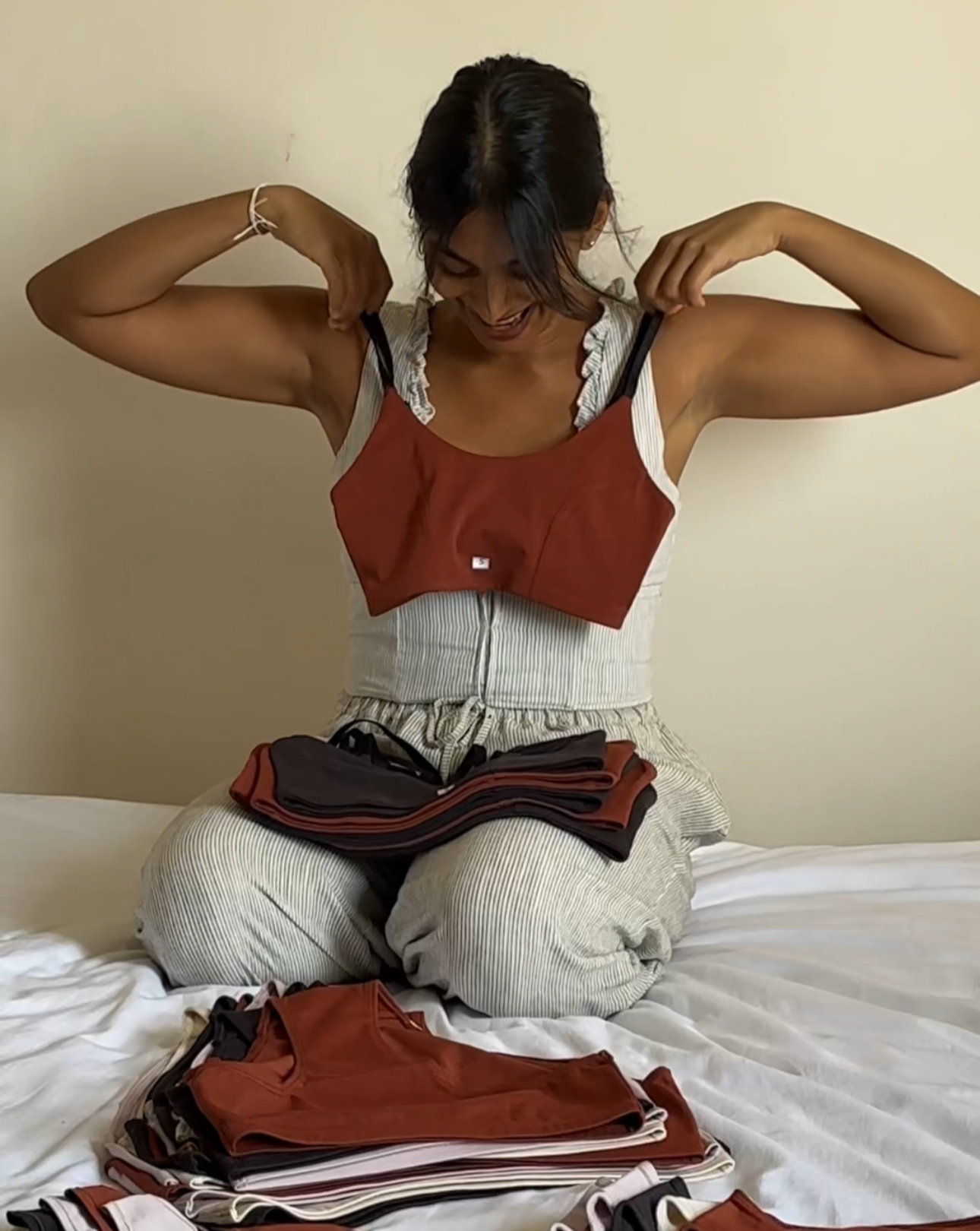
“Think of it as a lifelong journey of buying intentionally, cherishing every piece that you buy, and knowing the people, company, or brand well enough to ask yourself, 'Do I want to support this piece that is coming from this brand?'
And also, don’t forget to have fun. It’s fashion! Dive into linens with embroidery, natural dyes, and all the flowy fits out there! It’s hard to come across, but they’re out there.”
For women just waking up to PFAS and endocrine disruptors in their clothes, where should they begin?
When you visit behind the scenes of how garments are made around the world, it can be quite disturbing to see:
The sheer volume of production
How dyes are just leaked into our waterways
How chemical treatments and all of these fabric finishes are eventually discarded back into our waterways
Microplastics, shedding from every single one of our washing machines every time we wash something synthetic.
The roadmap that we recommend, and the reason why we started with underwear in the first place, is to start with your next-to-skin layer:
Underwear
Bralette
Swimwear, sauna wear
Tops and bottoms, like leggings or pants, shirts, and tank tops
Those are the things that are literally directly touching your skin. Swimwear is still a very niche natural-fabric market, but it’s definitely something that we want to get into. I think it needs a huge overhaul because women literally bake in the sun wearing 100% plastic, and that is disturbing.
After that, the rest of your wardrobe is going to have items like sweaters, dresses, and things like that that you can replace as you go through life.
Replacing your wardrobe with 100% natural fabrics overnight is not something I will ever recommend to anyone. It’s what I did, and it gave me a fashion identity crisis because I went from being extremely colorful and fashionable to beige and boring, and I really had to start from scratch. I would never recommend that to anybody.
Instead, think of it as a lifelong journey of buying intentionally, cherishing every piece that you buy, and knowing the people, company, or brand well enough to ask yourself, “Do I want to support this piece that is coming from this brand?”
And also, don’t forget to have fun. It’s fashion! Dive into linens with embroidery, natural dyes, and all the flowy fits out there! It’s hard to come across, but they’re out there.
And it goes without saying, if you’re investing into a new piece of clothing, read the material composition. Ask the store owner if there is no label. Anything that is over 10% spandex, to me, is a big no, so I usually try to stay below that threshold if I do get something that’s a little bit stretchy.
Fashion is an industry built on speed and exploitation. What does it look like to do things differently?
It’s been really cool to meet the artisans who are making our garments and see them work. They’re incredibly highly skilled makers who have been in garment factories for so many decades, and chose to work with smaller apparel studios at a sustainable pace. It’s their bread and butter, and they really know what they’re doing.
To be able to speak with these artisans in their mother tongue, to be in the same room as them, and to hear their concerns or their ideas has been really special. Even our Quality Assurance contact is an absolute gem. He used to commute from so far away just because he wanted to work on our brand since it was owned by a Sri Lankan, which to them is very rare. Most brands they work with for export garments are owned overseas. To us, that is such an absolute honor.
It’s been really cool to support local artisans and not treat them like numbers or cogs in a machine.
All of our pieces are handmade in a small-batch studio where there’s essentially no production line. It’s a sample room, and everything is made there because we keep our volumes really small.
I’d never worked where I was born, so it’s been really cool to revisit my roots from a completely different perspective.
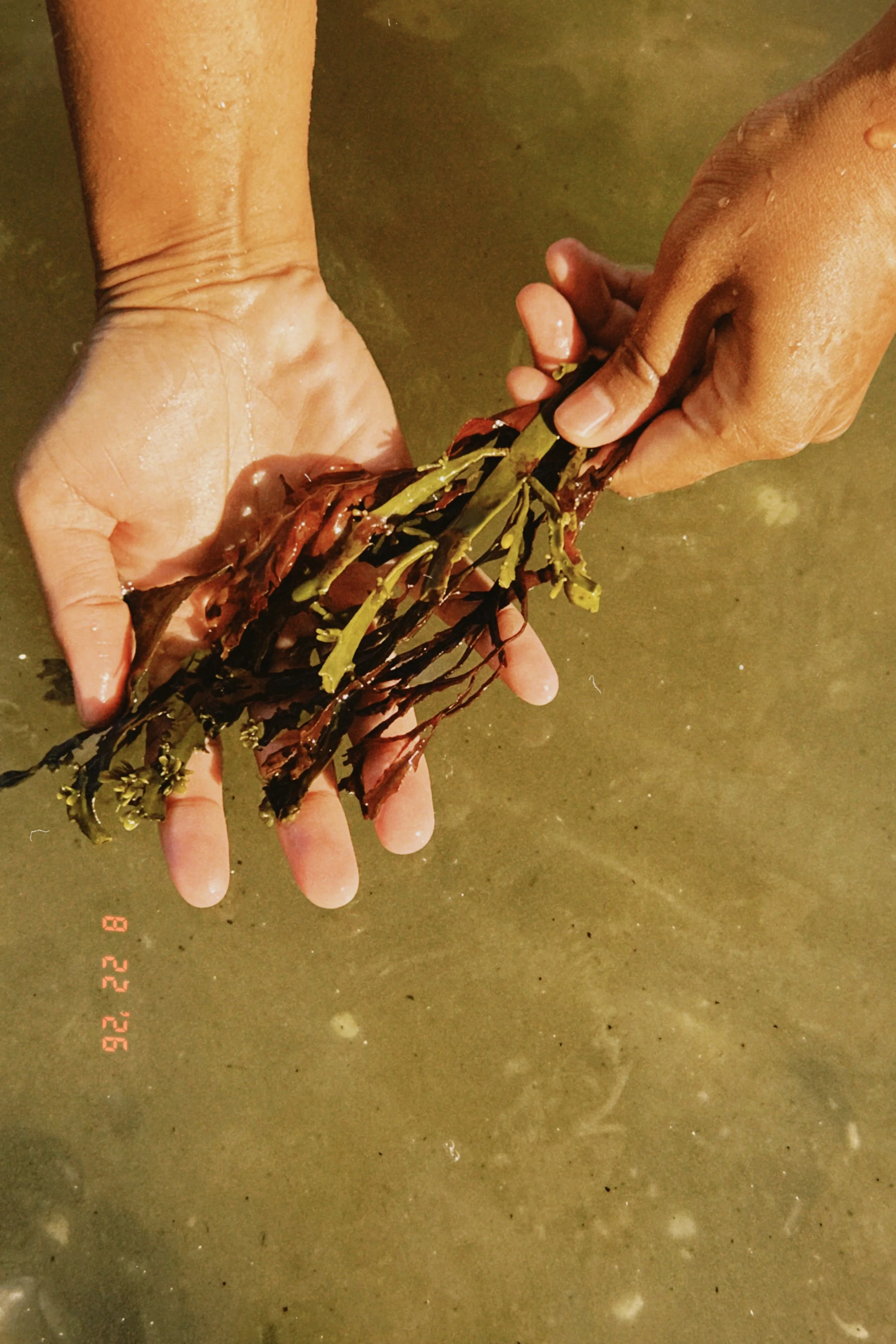
“I’ve always gravitated toward the ocean. I’m an island girl, and even the name Kiseau is inspired by water, so there was an immediate emotional connection to [seaweed].
I joke that Kiseau is definitely for the mermaid girls, the ocean girls, the sun-kissed girls. There’s something really special about wearing a material that has marine trace minerals. It creates this physical connection back to nature, which is ultimately what we wanted our apparel to embody.”
Okay: seaweed underwear. What informed your choice of materials?
When we began developing our underwear, I ordered hundreds of swatches from fabric manufacturers all around the world to understand what was actually out there. I came across some really fascinating materials: aloe vera-based fabrics, hemp blends, different bio-based and cell-derived materials. But SeaCell really caught my eye.
I’ve always gravitated toward the ocean. I’m an island girl, and even the name Kiseau is inspired by water, so there was an immediate emotional connection to the material. But beyond that, it felt like this next-generation innovation in the textile space.
It’s a proprietary fiber made using eucalyptus-based lyocell and sustainably harvested Icelandic seaweed, specifically rockweed gathered from the fjords of Iceland.
What makes the seaweed particularly interesting is that it naturally contains vitamins, antioxidants, and marine trace minerals. Underwear is one of the garments that sits directly against some of the most sensitive skin on your body, so the materials you choose really matter. SeaCell offered this beautiful combination of softness, comfort, and a connection to the ocean that felt very aligned with what we wanted Kiseau to be.
I do joke that Kiseau is definitely for the mermaid girls, the ocean girls, the sun-kissed girls. There’s something really special about wearing a material that has marine trace minerals. It creates this physical connection back to nature, which is ultimately what we wanted our apparel to embody.
Natural fabrics are genuinely more expensive than synthetics, and you're upfront about that. How do you think about making non-toxic clothing something that isn't just a luxury for the already-well?

This is an incredibly big challenge for us. When we started out, I really wanted to position our products to be as accessible as possible to as many people as possible, essentially to democratize access to natural underwear. But as we began looking at our cost of goods and how much it actually costs to produce the fabric, it quickly became completely unfeasible, especially for a small brand that already pays extremely high rates for small-batch production.
For anyone who doesn’t have insight into factories and how a lot of garment studios work, the higher the output, the cheaper your product can be. If you’re making 100,000 pieces of a garment, your cost of goods can be extremely low. Pennies.
If you’re doing small-batch production and using a rare blend of organic natural fabrics, the price suddenly spikes. Which is why, if you look across the board at most all-natural, organic clothing companies, the price point is so high. The cost to produce those goods is so much higher than producing something like a polyester version of the exact same garment.
I had a rude awakening discovering this while I was searching for the blend of fabric we wanted to use for Kiseau. I remember getting all of these pricing sheets for fabrics, and they always started from the cheapest to the most expensive. It would start with nylon, spandex, polyesters, and acrylics, all these different synthetic materials, and then you’d get into recycled polyester. Essentially, all the petrochemical-based fabrics were right at the top because they were the cheapest, by a landslide. Then you’d get into the organic cottons, the hemp, the Tencel, and then into the merino wools, cashmeres, and silks.
Obviously, the further down that list you went, the price would 3X, 5X, 10X, 20X due to rarity, demand, time and energy needed to produce those fabrics versus petrochemical pellets that are melted down and woven into these tiny microfiber “noodles,” which are then woven into fabric.
But that being said, with this new natural clothing era we’re stepping into, I really do hope the cost of goods goes down as demand for natural materials continues to grow. I hope that in the next five to ten years, the cost of goods will come down for Kiseau and, more importantly, that natural clothing will become more accessible to everyone.

“Wearing natural brings you closer to nature, in this world that is constantly pushing us toward living a more artificial life. Eating whole foods, spending more time in nature, and wearing natural clothes can all be personal acts of rebellion against the artificial.”
We’re big on the idea that what’s good for your body and the world are always tangled together. What role do you think our everyday choices (down to our underwear) play in the bigger fight for a less toxic world?
Wearing natural brings you closer to nature, in this world that is constantly pushing us toward living a more artificial life. Eating whole foods, spending more time in nature, and wearing natural clothes can all be personal acts of rebellion against the artificial.
Instead, we can tune into a more conscious, grounded, and wholesome way of life.
It can be scary to detox your life. You begin to see everything as your enemy.
Anyone who goes through that awakening experiences fear, and that’s natural. But it’s important not to latch onto it or make it your entire personality, because it can become very dark to think that the entire world is out to get you at all times. That kind of constant fear can leave your nervous system feeling completely dysregulated.
Instead, make thoughtful choices, stay informed, and make detoxing your life playful. Think of it as getting a chance to reinvent the way you used to live and step into a new version of yourself.
And practice all of it with kindness. Doing all this detoxing while being hateful and fearful is the opposite of where we want to get to. We want to lean into love. Sunshine. Kindness.
