

What Your Body Needs in the Second Half of Your Cycle (That You Weren’t Taught)

You're not lazy in the second half of your cycle. You're running on different fuel with different needs. Here's what actually helps.
The second half of your cycle—from ovulation through menstruation—operates on different biology than the first half. Estrogen drops, progesterone rises, and your body shifts into a phase that requires more protein, more rest, gentler movement, and firmer nos. Forcing your follicular routine through your luteal and menstrual phases is why you crash. Here's what your body actually needs.
the crash
You feel great after your period ends. Energy returns. You're social, productive, optimistic. You ride that wave through ovulation, thinking you've finally figured yourself out.
Then something shifts. Around day 18, 19, 20—the energy drops. The motivation disappears. The workouts that felt good now feel like punishment. The social plans you made feel impossible to keep.
You push through. Force the same routine. Wonder why you're so tired, so hungry, so irritable. Blame yourself for losing momentum.
This happens every month. You keep expecting consistency your body was never designed to give.
why the second half is different
After ovulation, estrogen drops and progesterone rises. This shift changes everything.
Your metabolism speeds up—you need more calories, especially more protein. Your body temperature rises slightly, which can disrupt sleep. Your brain chemistry shifts in ways that make you more inward, more sensitive, less tolerant of stimulation.
This is luteal phase. It lasts roughly from ovulation until your period starts—about 10-14 days.
Then comes menstruation. Hormones drop to their lowest point. Your body is shedding and renewing. Energy is at its minimum. You need rest more than any other time in your cycle.
The first half of your cycle—follicular phase and ovulation—is expansion. The second half is conservation. Trying to expand when your body needs to conserve is why you feel broken every month.
food: more protein, more calories
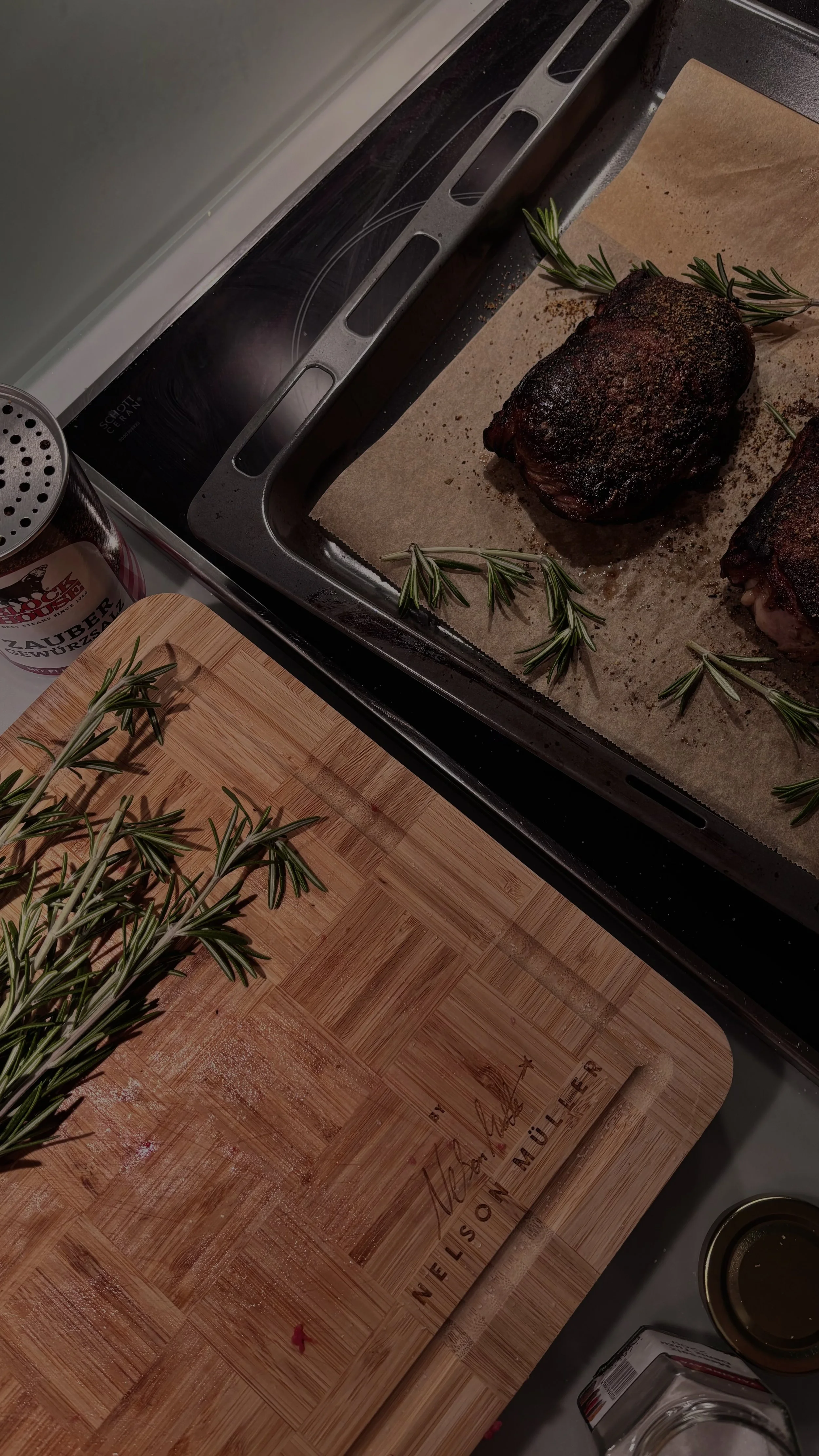
Your metabolism increases by 100-300 calories per day in the luteal phase. The hunger is real. Stop fighting it.
Eat more protein. Your body is preparing for potential pregnancy (even if you're not trying) and needs building blocks. Eggs, meat, fish, legumes. Protein at every meal.
Eat more complex carbohydrates. Progesterone can affect blood sugar stability. Sweet potatoes, oats, root vegetables help keep you steady.
Eat more magnesium-rich foods. Magnesium drops before menstruation and low levels contribute to cramps, mood swings, and poor sleep. Dark chocolate, leafy greens, pumpkin seeds, almonds.
Reduce caffeine and alcohol, especially in the days before your period. Both can worsen PMS symptoms, disrupt sleep, and increase anxiety.
During menstruation, focus on iron-rich foods to replenish what you're losing. Red meat, spinach, lentils. Pair with vitamin C for absorption.
movement: gentler
The workouts that feel amazing in follicular phase can feel destructive in luteal.
High-intensity training increases cortisol. In the first half of your cycle, you recover from this easily. In the second half, when progesterone is high and your body is already working harder, that extra cortisol burden can exhaust you.
Luteal phase movement: lower intensity, shorter duration. Walking, yoga, swimming, pilates, strength training with moderate weights. Movement that supports rather than depletes.
Menstrual phase movement: the gentlest of the cycle. Stretching, restorative yoga, slow walks. Or rest entirely. Your body is doing internal work.
You're cycling. Different phases, different capacity. The fitness industry sells consistency because it sells memberships. Your body doesn't work that way.
rest: actually non-negotiable

Sleep needs increase in the luteal phase. Progesterone is sedating—your body is asking for more rest. Give it.
Go to bed earlier in the week before your period. Protect your sleep more fiercely than any other time. The night before your period starts is often the worst for sleep disruption—expect it and plan for it.
During menstruation, rest is the work. Actual rest. Lying down. Doing less. Letting your body do its internal work.
This might mean fewer plans. Earlier nights. Slower mornings. It will definitely mean releasing the expectation that you should feel the same every day.
The first half is for doing. The second half is for being. Both are necessary. Skipping the rest phase doesn't make you more productive—it makes next month's cycle harder.
saying no
Your tolerance for nonsense decreases in luteal phase. Use that clarity.
You have less capacity for draining people. Less patience for situations that aren't working. Less ability to smooth things over and pretend everything is fine. (We wrote more about why [here]—link to luteal bullshit detector piece.)
Use this. The second half of your cycle is when to protect your energy, not extend it. Say no more easily. Cancel plans that feel wrong. Have the conversations you've been avoiding—your luteal self won't let you keep pretending.
During menstruation, this becomes even more essential. You're at your most inward. Forcing yourself to be outward—social, available, accommodating—depletes you at exactly the wrong time.
The world doesn't accommodate cyclical living. You have to build the accommodation yourself.
living with it
You can't change your cycle. You can stop fighting it.
Track your phases. Notice when the shift happens for you—it's not always exactly day 14. Learn your own rhythm.
Plan with your cycle, not against it. Schedule demanding work, difficult conversations, and big social events for the first half when you have the capacity. Protect the second half for quieter work, rest, and inward time.
Tell the people who need to know. Partners, close friends, collaborators. As information. "I'm in my luteal phase" can be useful language for people who want to support you.
The expectation of consistency was always wrong. You don't have the same energy every day. Nobody with a cycle does.
the shift
When you start working with your cycle instead of against it, something changes.
The crash softens. Because you stopped demanding what your body can't give. You build a life with room for both halves—expansion and conservation, doing and being, outward and inward.
Your cycle is a rhythm to live by.
Read our Journal.
The collection explores, the journal transforms. Get sanctuary in your inbox. Every other Sunday.
